
Work Culture Reflection: One Year in Singapore
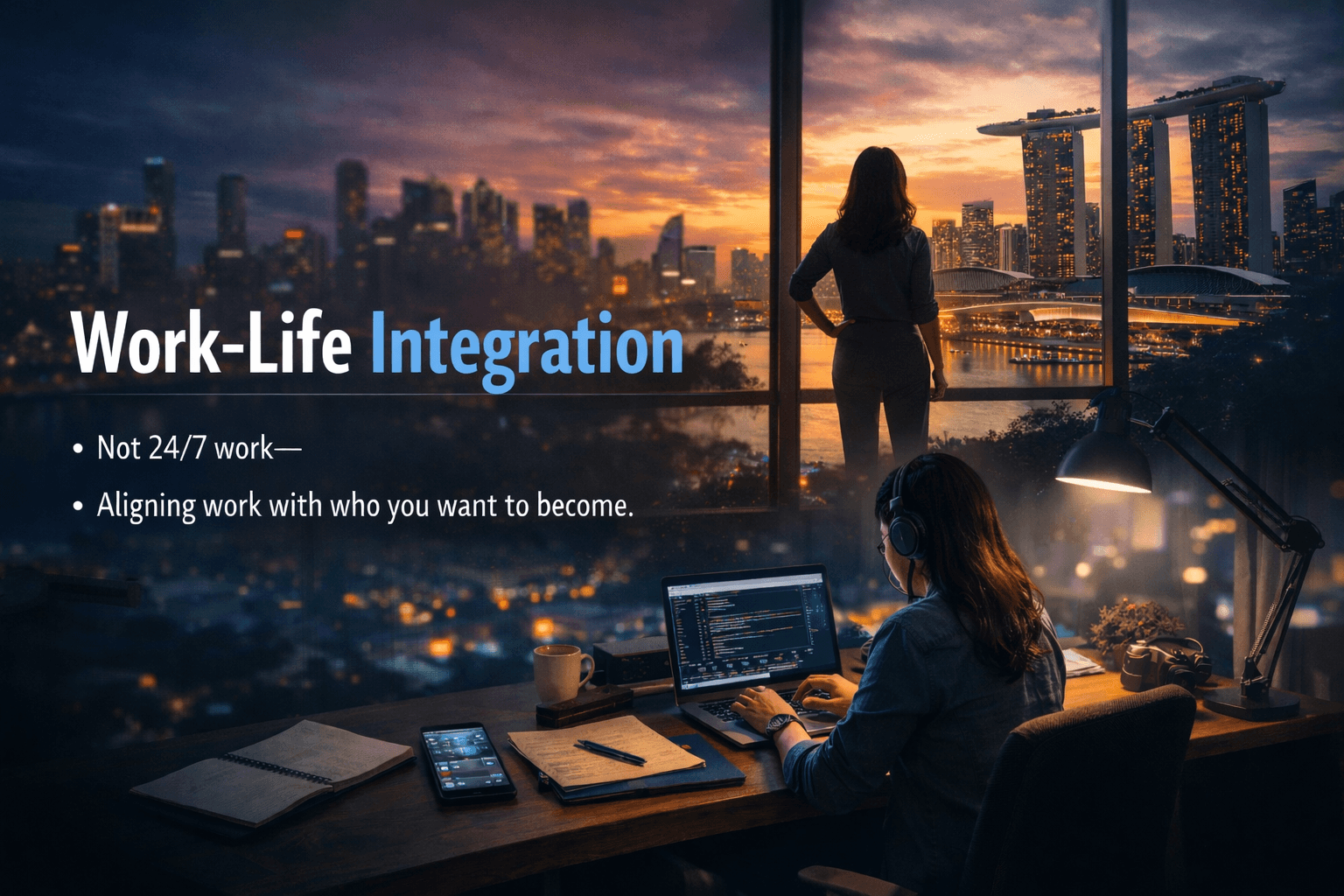
It’s been just over a year since I moved to Singapore. I promised that I’d report back. Here I am. Enough time to experience, observe, and, more importantly, rethink what “work culture” really means.
In the beginning, whenever I told people I relocated from New Zealand, I’d get that look - the subtle “what’s wrong with this person?” expression. I used to laugh along, pretending I understood.
Now, when I see that look, I actually do understand.
Over the past year, I’ve found myself taking calls after 9pm, quite often. I ask new clients for their WhatsApp after our first meeting, and discussing business on WhatsApp feels completely normal. (It was one of the biggest mindset challenge for me to talk about business on private channel.) My calendar has been a constant rotation of EBCs, QBRs, one after another. I’ve spoken in meetings with my camera off and not felt rude (which my kiwi and Aussie friends would get it.) And if I’m honest, my small talk skills may have declined :) as there’s simply less space for it.
And then comes the hardest part: work-life balance.
Compared to New Zealand, both my workload and pressure have easily tripled. But what surprised me more was the advice from people I respect, those senior leaders, high performers:
“You need to make your work your life.”
Really?
I doubted it. I questioned it. I rejected it. And then I kept coming back to it.
It took me a while, but I think I finally understand what it actually means.
It doesn’t mean working 24/7.
It doesn’t mean sacrificing your family or having no life.
It means integration.
The integration of work and life.
To me, this comes down to two things:
1. Find what you genuinely enjoy about your work.
2. Create more space in your life to do that.
Some people get stuck at step one. They dislike their job so much that they can’t find anything they enjoy. If that’s truly the case, then the answer is simple but not easy: it’s time to find something else.
For those who can still do their job but don’t love their job 100%, this is where it gets interesting.
Ask yourself:
Who do I want to become in 10 or 20 years?
What kind of life do I want to build?
Then:
List the skills, experiences, and exposure you need to get there
Find ways to do more of those things in your current role
If you can’t, change roles
If you can, double down and stay consistent
I’ve gone through this process. I know where I want to go, and I can clearly see how my current role is helping me get there.
Which is why you might now find me up at 6am, at my desk by 6:30, deploying an AI agent I built the night before. Or writing this article at 10pm after my family has gone to sleep. Or recording a tech video over the weekend.

From the outside, it looks like I’m working more.
But am I sacrificing my life?
Not really.
Because we all choose how we spend our time. And I’m choosing this.
What I do in my “personal time” is often an extension of my work, but it’s the part that energises me. It sharpens my skills, strengthens my thinking, and builds my personal brand. And I know that if I keep doing this, day after day, week after week, it will compound.
That’s the real game.
That’s integration.
Conclusion
There’s no longer a clean switch-off moment. No clear boundary between work and personal life like I once had in New Zealand.
But instead of feeling trapped by it, I feel… alive.
Because when work becomes something you intentionally use to build who you want to become, not just something you do. The boundary between “work” and “life” stops being a problem to manage.
It becomes alignment.
Your work and your personal time start pulling in the same direction towards the same future.
Looking back, the split life I had before, where work and personal life were completely disconnected. It gave me balance, but not always fulfilment. At times, it felt like I was living two separate identities.
Now, I feel more integrated. More consistent. More… myself.
And that, to me, is the real shift.